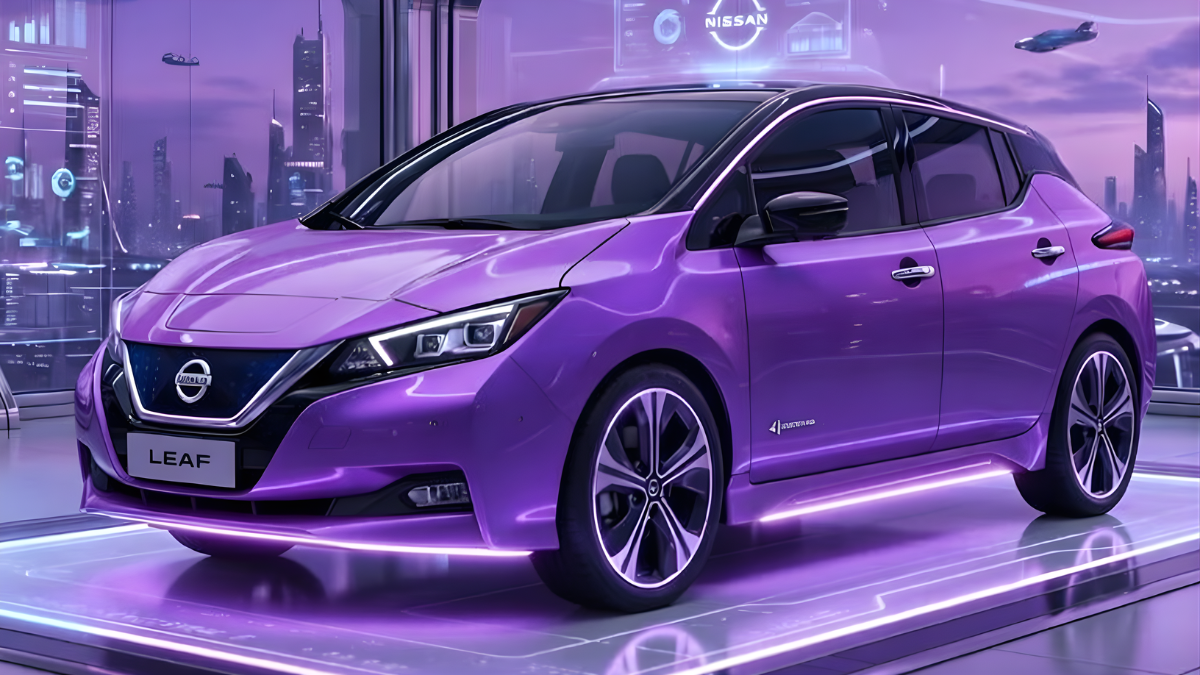
For over a decade, the Nissan Leaf has been a household name as the world’s first mass-market electric vehicle. However, as competitors introduced longer ranges and faster charging, the Leaf began to feel like a relic of the past. That all changes with the 2026 Nissan Leaf. This isn’t just a facelift; it is a total transformation. Nissan has reimagined the Leaf as a sleek, tech-forward crossover that addresses every major criticism of previous generations. It is sharper, smarter, and—most importantly—finally ready for the long haul.
A Radical Redesign: From Hatchback to Crossover
The most striking change for 2026 is the silhouette. The humble hatchback look is gone, replaced by a “coupe-style crossover” design inspired by its bigger sibling, the Ariya. With a more aggressive stance, motorized flush door handles, and a significantly improved drag coefficient of 0.26, the new Leaf looks premium and modern. The shift to a crossover platform doesn’t just improve aesthetics; it provides a higher driving position and a more commanding presence on the road, making it much more appealing to the modern car buyer.
| Feature | 2025 Nissan Leaf (Old) | 2026 Nissan Leaf (New) |
| Body Style | Compact Hatchback | Coupe-Style Crossover |
| Max Range | 212 Miles | Up to 303 Miles |
| Charging Port | CHAdeMO (Outdated) | NACS (Tesla Standard) + J1772 |
| Battery Cooling | Air-Cooled (Slow) | Liquid-Cooled (Fast) |
| Starting MSRP | ~$28,000 | ~$29,990 |
The End of Slow Charging: Liquid Cooling and NACS
The biggest “pain point” for Leaf owners has always been its air-cooled battery and the outdated CHAdeMO charging port. Nissan has finally listened to its fans. The 2026 Leaf now features a 75-kWh liquid-cooled battery pack, allowing for consistent performance even in extreme temperatures. Furthermore, the 2026 model adopts the North American Charging Standard (NACS) port as standard. This means Leaf owners can now natively access the massive Tesla Supercharger network, making long-distance road trips a reality rather than a challenge.
A High-Tech Sanctuary Inside
The interior of the 2026 Leaf has been completely modernized to match its futuristic exterior. Gone are the physical dials and small screens. In their place sits a stunning dual-widescreen display setup—up to 14.3 inches on higher trims—featuring Google built-in. This integration brings Google Maps, Assistant, and the Play Store directly into the car’s ecosystem. Coupled with an available 10-speaker Bose Personal Plus audio system and “Zero Gravity” seats, the cabin offers a level of comfort and sophistication that punches well above its entry-level price point.
Unbeatable Value in the EV Market
Perhaps the most impressive feat Nissan achieved with the 2026 Leaf is the pricing. Despite the massive upgrades in range, charging technology, and interior quality, the starting price remains remarkably close to the previous generation. Starting at an MSRP of just under $30,000 for the S+ trim, the Leaf remains one of the most accessible ways to enter the world of electric mobility. It is a clear message from Nissan: you don’t have to spend $50,000 to get a high-quality, long-range electric vehicle.
Conclusion
The 2026 Nissan Leaf is proof that a legacy brand can pivot and perfect its craft. By addressing the critical flaws of previous models—specifically charging speeds and range—Nissan has turned the Leaf back into a top-tier contender. It is a vehicle that balances style, utility, and extreme value, making it the perfect choice for the modern driver. The pioneer of EVs is back, and this time, it’s ready to lead the pack once again.
Disclaimer: Specifications and pricing are based on early 2026 market releases in North America. Features such as liquid cooling and NACS ports may vary by international region